New Home Builder: Key Takeaways
- The right home builder prioritizes transparency, licensing, and proper insurance, and these essentials protect you from hidden risks during the homebuilding process
- A strong builder warranty and responsive post-construction support are non-negotiable, offering long-term confidence that resale homes and weak builders can’t provide
- Clear contracts and predictable change-order practices help prevent hidden costs and budget overruns, one of the most common frustrations for new construction buyers
- Communication is a major indicator of builder quality, delays, vague updates, or inconsistent answers often signal deeper issues with process or reliability
- Construction delays happen, but trustworthy builders set realistic expectations, explain changes openly, and never sacrifice quality for speed
Nearly 60% of homebuilding issues come from choosing the wrong builder, a statistic that surprises many first-time and seasoned buyers alike.
Building a new home is supposed to be one of life’s biggest adventures, not a source of stress. But the truth is, if you choose the wrong builder, what starts with excitement can quickly spiral into delays, surprise costs, or worse.
This isn’t just about blueprints and budgets. It’s about your future, your peace of mind, and the place you’ll call home for years to come.
In this guide, we’ll walk through the seven biggest red flags to watch for when selecting a new home builder in 2026, from weak warranties to hidden fees to inconsistent quality control.
How To Choose a New Home Builder in 2026
Before comparing floor plans or finishes, focus on the key qualities that separate a trustworthy builder from a risky one.
In 2026, homebuyers should prioritize three essential factors:
- Transparency from day one: A reliable builder is upfront about pricing, structural specifications, warranties, and what’s included in your contract. They answer questions directly, clearly explain your options, and walk you through the process without hidden surprises
- Proven construction quality: Look at what you can’t see in a model home, things like window performance ratings, foundation engineering, framing methods, and overall material standards. Builders who exceed basic requirements typically deliver homes that feel sturdier, last longer, and require fewer early repairs
- Strong warranty and ongoing support: A good builder doesn’t disappear after closing. Comprehensive warranty coverage and responsive post-construction support show that a builder stands behind their work and cares about your long-term satisfaction
When these three pillars align, you get a smoother, more confident building experience, something Evergreene is known for as a semi-custom home builder in Virginia, Maryland, and Delaware.

7 Biggest Red Flags To Watch for When Choosing a New Home Builder in 2026
To make the process of choosing a new home builder easier, here are the seven most important red flags to look out for.
Red Flag #1: Lack of Transparency, Licensing, or Proper Builder Insurance
If a builder dodges your questions, gives vague answers, or can’t show proof of insurance, trust your gut. Builders who are doing things right won’t be secretive about it.
Warning signs you should recognize:
- They can’t prove they’re licensed or insured
- Their quotes are all over the place
- They avoid talking about permits or building codes
- You’re still unsure what the contract actually includes
Why it matters: A lack of transparency often leads to hidden fees, schedule surprises, and a stressful building experience, especially for first-time or custom homebuyers.
Evergreene positioning: Evergreene Homes is upfront about structural specifications, inclusions, warranties, and documentation. Homebuyers know what to expect from day one, and communication remains clear throughout the home building process.
Learn the benefits of semi-custom homes →
Red Flag #2: No Warranty or Weak Post-Construction Support
Ever wonder what it says when a builder won’t stand behind their work? If their warranty feels flimsy or you’re not sure who to call when something breaks, that’s a red flag
Be cautious if:
- The warranty is short or full of fine print
- They push you off to a third party for repairs
- No one explains what happens after you get the keys
- You’re already getting ghosted before move-in
Why it matters: A new home should come with peace of mind. Without strong coverage, even small issues can become expensive and time-consuming.
Evergreene positioning: Evergreene provides a best-in-class warranty, backing its workmanship, systems, and structural components. Buyers can count on long-term support well after they move in.
Red Flag #3: Hidden Costs, Budget Overruns, and Confusing Change Orders
A builder should never surprise you with unexpected fees or upgrades that weren’t clearly explained.
Red flags to look for:
- A low base price that doesn’t include essentials like flooring or lighting
- Change orders piling up with no clear explanation
- No written list showing what’s included vs. what’s an upgrade
- Pressure to upgrade without a solid reason
Why it matters: Predictability is crucial when building a home. Hidden fees quickly erode trust and your budget.
Evergreene positioning: Evergreene starts with a higher standard spec level, meaning many features other builders charge extra for are included upfront. Their semi-custom process reduces unnecessary change orders by clearly outlining options early.
Red Flag #4: Poor Communication, Negative Reviews, or Reputation Issues
Communication can make or break the building experience. If a builder isn’t responsive before the contract is signed, things won’t improve afterward.
Warning signs:
- Delayed responses
- Confusing or inconsistent answers
- Unclear points of contact
- Repeated reviewer complaints about communication
Why it matters: Building a home involves thousands of decisions. You need a builder who respects your time and keeps you informed.
Evergreene positioning: Evergreene is known for clear communication, dedicated points of contact, and a reputation built on transparency and accountability across Virginia, Maryland, and Delaware.
Red Flag #5: Missed Deadlines, Construction Delays, and Scheduling Problems
Delays happen, especially with permitting, weather, and supply chains, but how a builder handles them is what matters.
Warning signs:
- No documented construction schedule
- No update process during each phase
- Major timeline swings with no explanation
- Builders who “guarantee fast delivery”
Why it matters: Unpredictable timelines create stress, financial strain, and logistical issues, especially when selling a previous home or arranging temporary housing.
Evergreene positioning: Evergreene sets realistic expectations and communicates proactively throughout the build. While timelines vary by floor plan and location, quality and clarity always take priority.
Red Flag #6: Lack of Experience or a Weak Builder Portfolio
A portfolio reveals a builder’s craftsmanship, consistency, and capability. If a builder can’t show their work, that’s a problem.
Warning signs:
- No gallery or completed homes shown
- Minimal experience in your region
- Inconsistent architectural design or finish quality
- No testimonials or community presence
Why it matters: Local expertise is especially important for the Mid-Atlantic, where soil conditions, permitting requirements, and climate considerations can vary widely.
Evergreene positioning: Evergreene brings years of semi-custom building experience across Virginia, Maryland, and Delaware, with floor plans and communities designed specifically for the region.
Explore our new home communities → See Virginia communities, Maryland communities, Delaware communities →
Red Flag #7: No Defined Home Building Process or Inconsistent Quality Control
A clear process protects your investment. Builders without a defined approach often cut corners or improvise as they go.
Warning signs:
- No documented build process
- No quality checks at specific phases
- No explanation of structural standards
- Homes that vary widely in quality
Why it matters: Quality control ensures structural integrity, energy efficiency performance, and long-term durability.
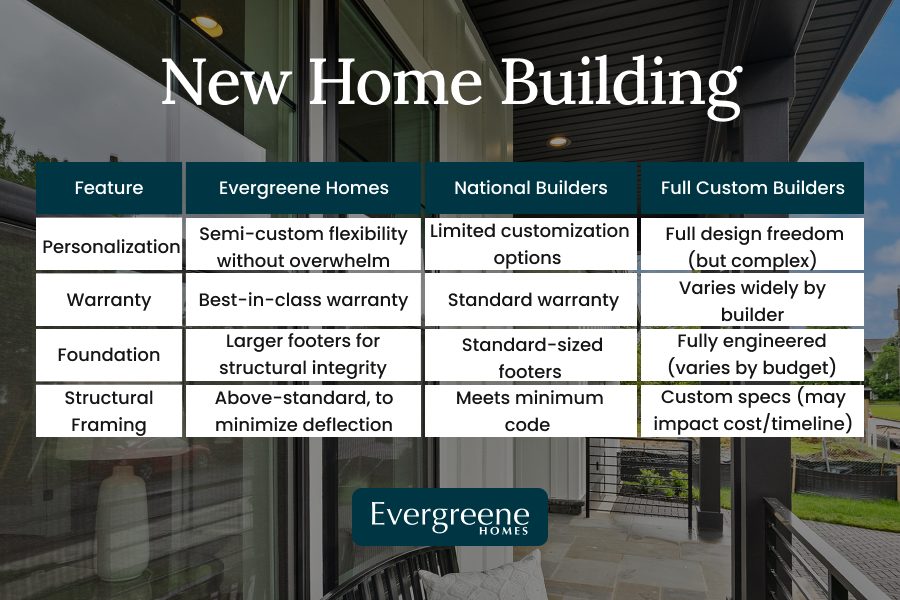
Evergreene positioning: Evergreene follows a structured, transparent building process supported by above-standard engineering practices, including:
- Higher U-Factor windows
- Larger footers for foundation stability
- Above-standard structural specs to reduce floor deflection
- Higher standard spec levels across materials and finishes
How To Confidently Choose the Right Home Builder in 2026
The builders who rise above the rest are the ones who communicate openly, follow proven processes, and stand behind every detail of the home they create.
As a semi-custom homebuilder, Evergreene Homes blends personalization with thoughtful engineering, giving you more control over your home without the complexity of a fully custom build.
What today’s buyers look for and where Evergreene delivers:
- Clear, transparent communication from the first conversation to the final walkthrough
- A best-in-class warranty that protects your home well beyond move-in
- Higher U-Factor windows for improved comfort and energy performance
- Larger footers and above-standard structural engineering designed for long-term stability and reduced floor deflection
- A higher standard spec level, so essential features aren’t treated as costly upgrades
- Semi-custom personalization that lets you tailor a proven plan to your lifestyle
- Post-construction support that keeps homeowners confident for years
These are the details that create not just a beautiful home now, but a solid, reliable home for the future.
To learn more or take the next step, check out these resources as well:
- Communities: Where we build around Lake Anna → View Communities
- Quick move-in: Homes ready now or nearing completion → Browse Homes
- Open houses: Tour homes in person → Find an Open House
Your home should feel intentionally yours, and the right builder makes that possible.
New Home Builders: FAQs
Still have questions? You’re not alone. Here are the ones we hear most often from buyers considering new construction.
What should I look for when comparing one home builder to another?
When comparing a home builder, focus on their construction standards, warranty coverage, communication style, and how clearly they explain the home building process. A good builder will share detailed specifications, offer transparent pricing, and walk you through exactly what to expect at every stage.
How do I know if a new home builder is properly licensed and insured?
A reputable new home builder will provide documentation for their licensing, liability insurance, and workers’ compensation coverage without hesitation. You can also verify licensing through state contractor boards or local building departments.
What questions should I ask a builder before signing a contract?
Key questions to ask a builder include:
- What warranty coverage do you provide?
- What is included in the base price vs. optional upgrades?
- How do you handle change orders?
- Who will be my main point of contact during construction?
- What quality control steps are built into your process?
These questions help reveal transparency, communication habits, and overall professionalism.
How do construction delays typically happen, and how should a good builder handle them?
Construction delays usually stem from weather, permitting, material availability, or design changes. A trustworthy builder won’t promise unrealistic timelines; instead, they communicate clearly, set expectations early, and provide regular updates throughout the process.
What are the hidden costs I should watch out for when hiring a home builder?
Common hidden costs include site preparation fees, utility connections, required upgrades, change orders, and fees added late in the process. Transparent builders outline all expected expenses upfront and explain how upgrades and selections affect the final price.
Why is a home builder’s portfolio so important?
A strong builder portfolio shows consistency in craftsmanship, design quality, and architectural style. It also demonstrates experience with the type of home you want, whether semi-custom, new construction, or custom designs.